

Travertine Restoration in Washington DC, Maryland & Virginia — What You Need to Know

Travertine is one of the most widely used natural stones in the DMV — in entryway floors, bathroom tile, fireplace surrounds, and outdoor patios. It's warm, elegant, and durable. It's also one of the most misunderstood stones when it comes to care, and as a result, it's one of the most commonly damaged. At Crystal Service, travertine restoration is a significant part of our work across Washington DC, Maryland, and Virginia — and the results we achieve are consistently dramatic.
What makes travertine different from marble
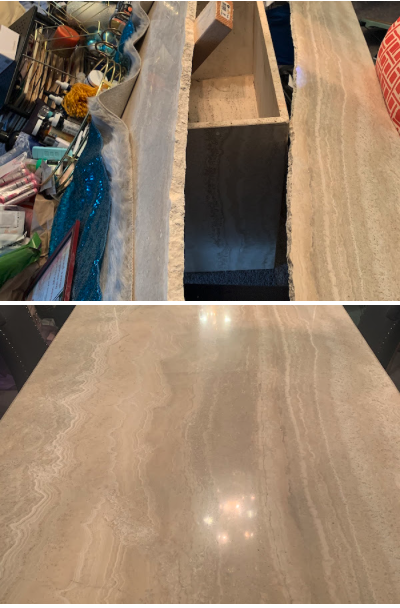
Travertine is a sedimentary limestone formed in hot springs and caves. Unlike marble, which is a metamorphic rock with a dense, uniform crystal structure, travertine is naturally porous and filled with small holes and channels called voids. These voids are part of the stone's character — in a filled travertine installation, they're filled with grout or resin before the surface is honed and sealed. In an unfilled installation, they remain open.
This porosity means travertine absorbs liquids readily, stains more easily than marble, and requires more aggressive sealing. It's also softer than marble, which means it scratches more easily and responds quickly to acid damage from improper cleaners.
The most common travertine problems we see
Hollow tiles are extremely common in older travertine installations. Over time, the adhesive beneath the tile delaminates, leaving the tile resting on air rather than a solid substrate. You can hear it by tapping — a hollow tile sounds distinctly different from a properly bonded one. We reinject these with specialized adhesive through micro-holes that are invisible after the repair.
Void deterioration is the other major issue. In filled travertine, the filler material often degrades faster than the stone itself, leaving rough, pitted voids across the surface. We re-fill these with color-matched epoxy or grout compounds before beginning the honing process.
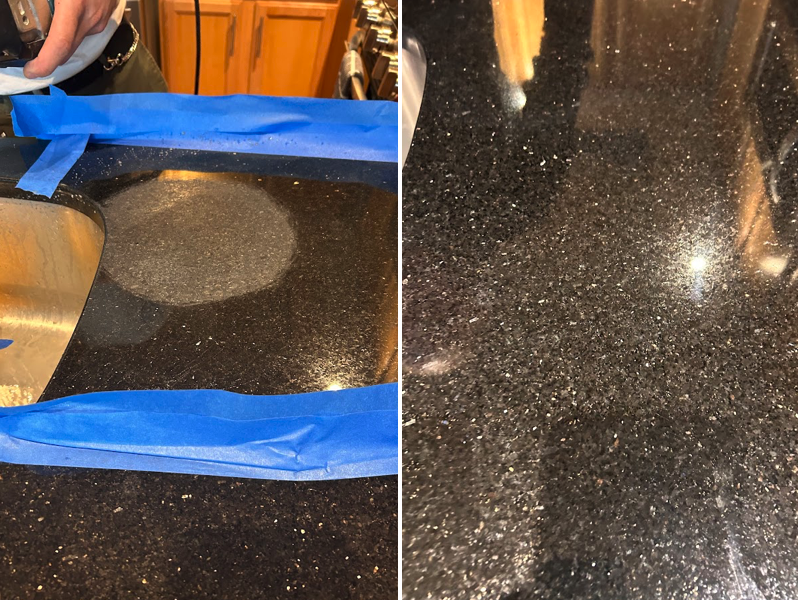
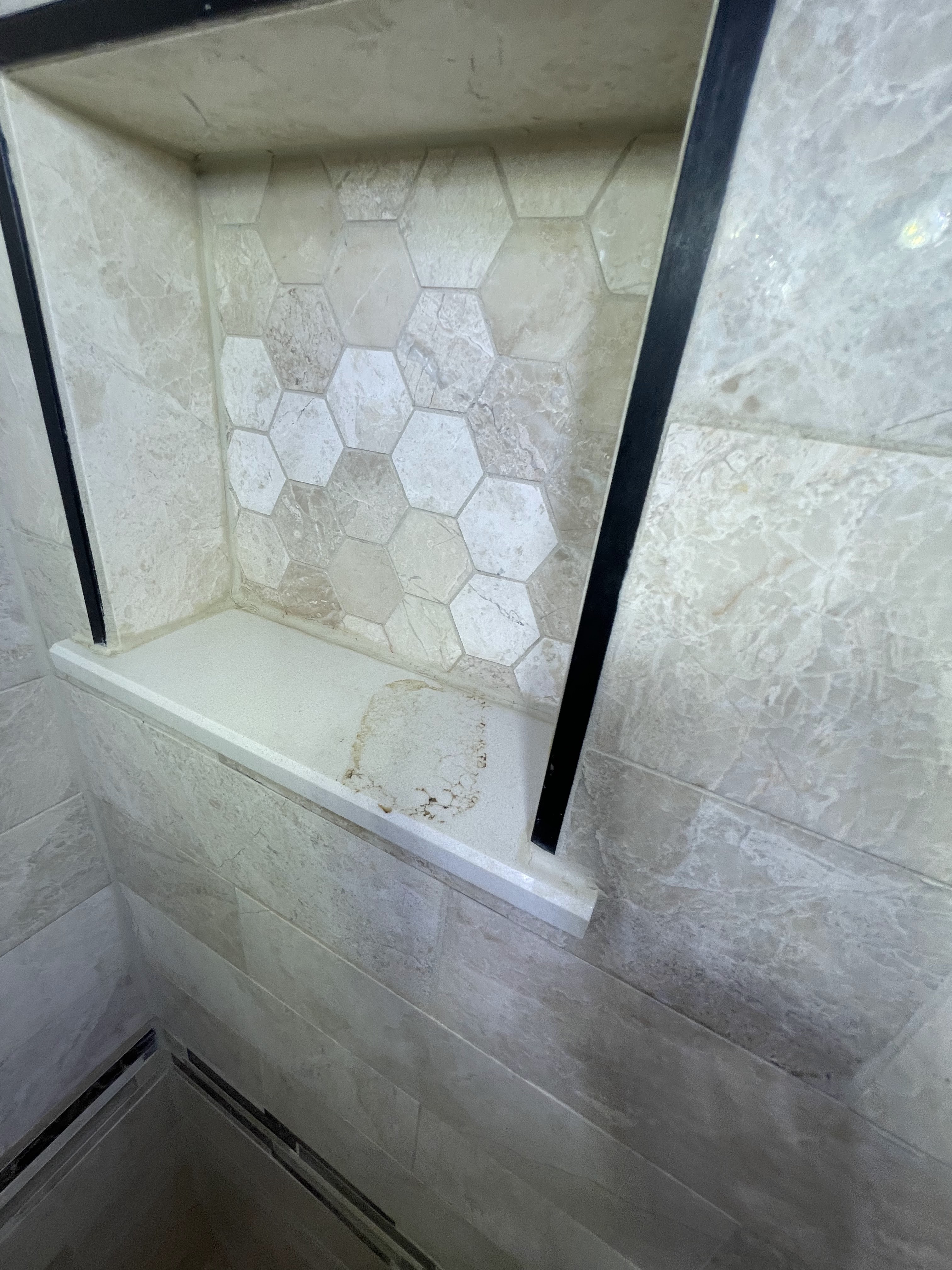
Etch marks from acidic cleaning products are just as common on travertine as on marble. We see a lot of travertine floors that have been cleaned with vinegar-based products for years — the surface looks perpetually dull and chalky. This is fully restorable through diamond honing.
Our travertine restoration process
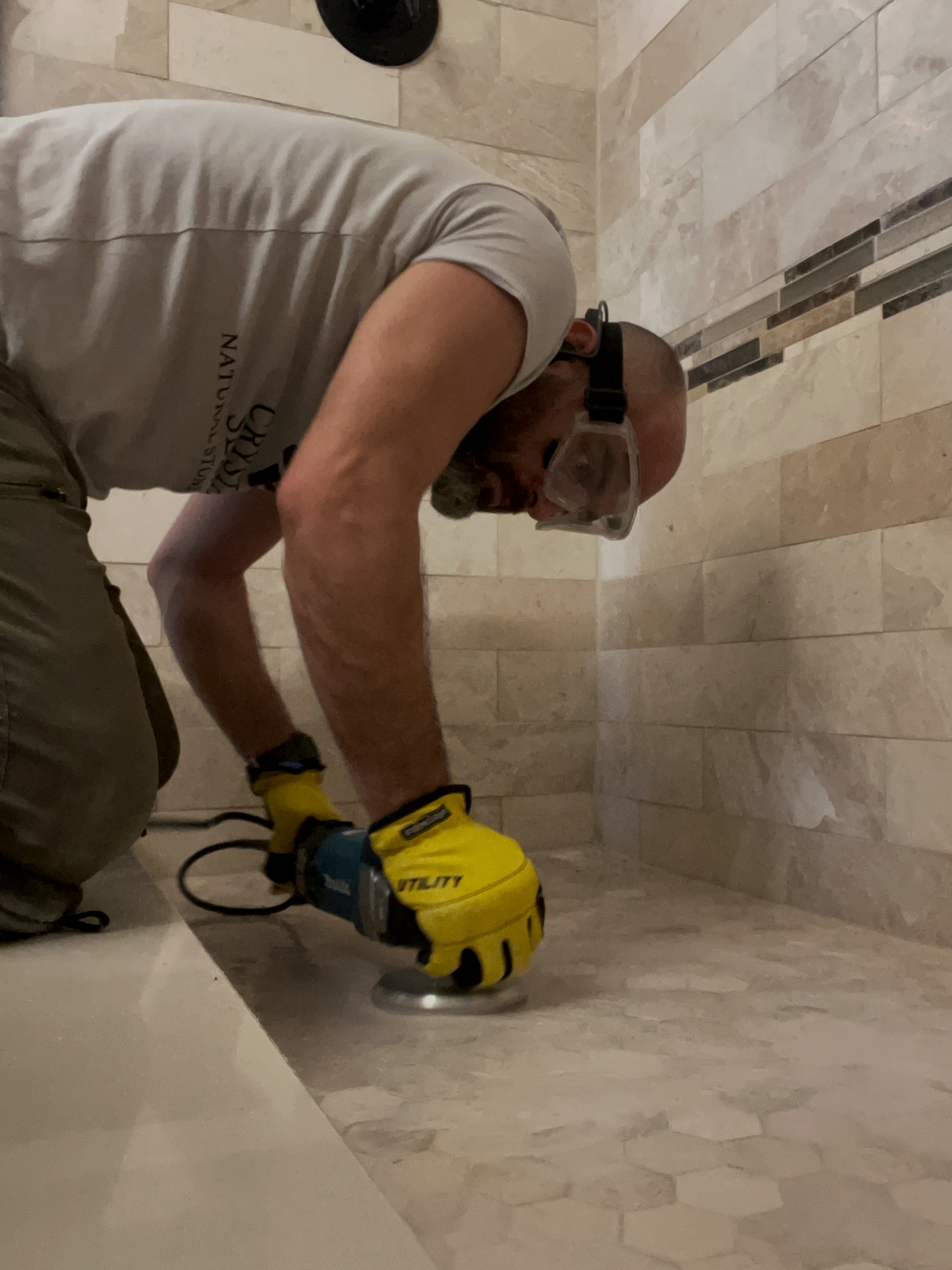
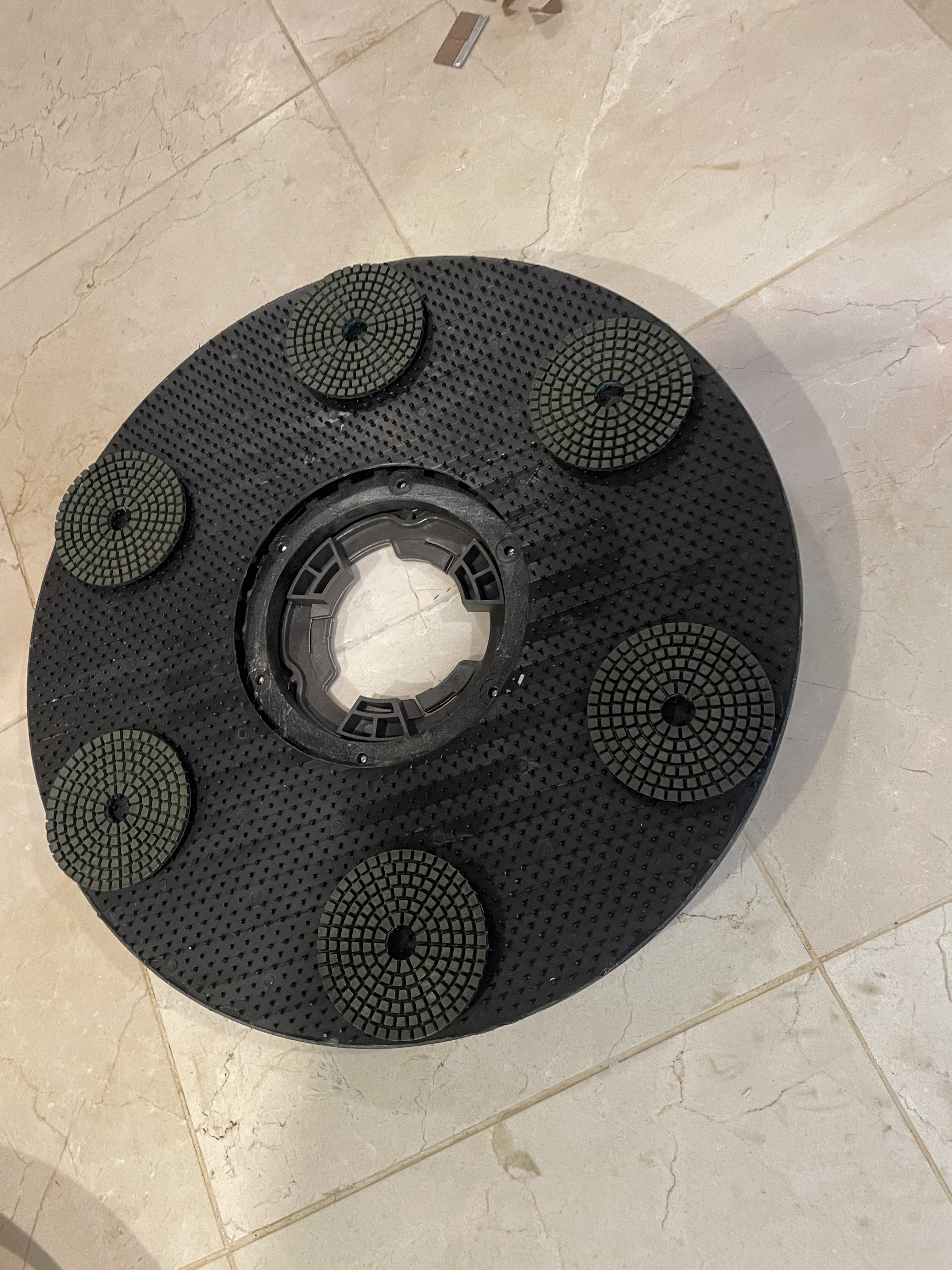
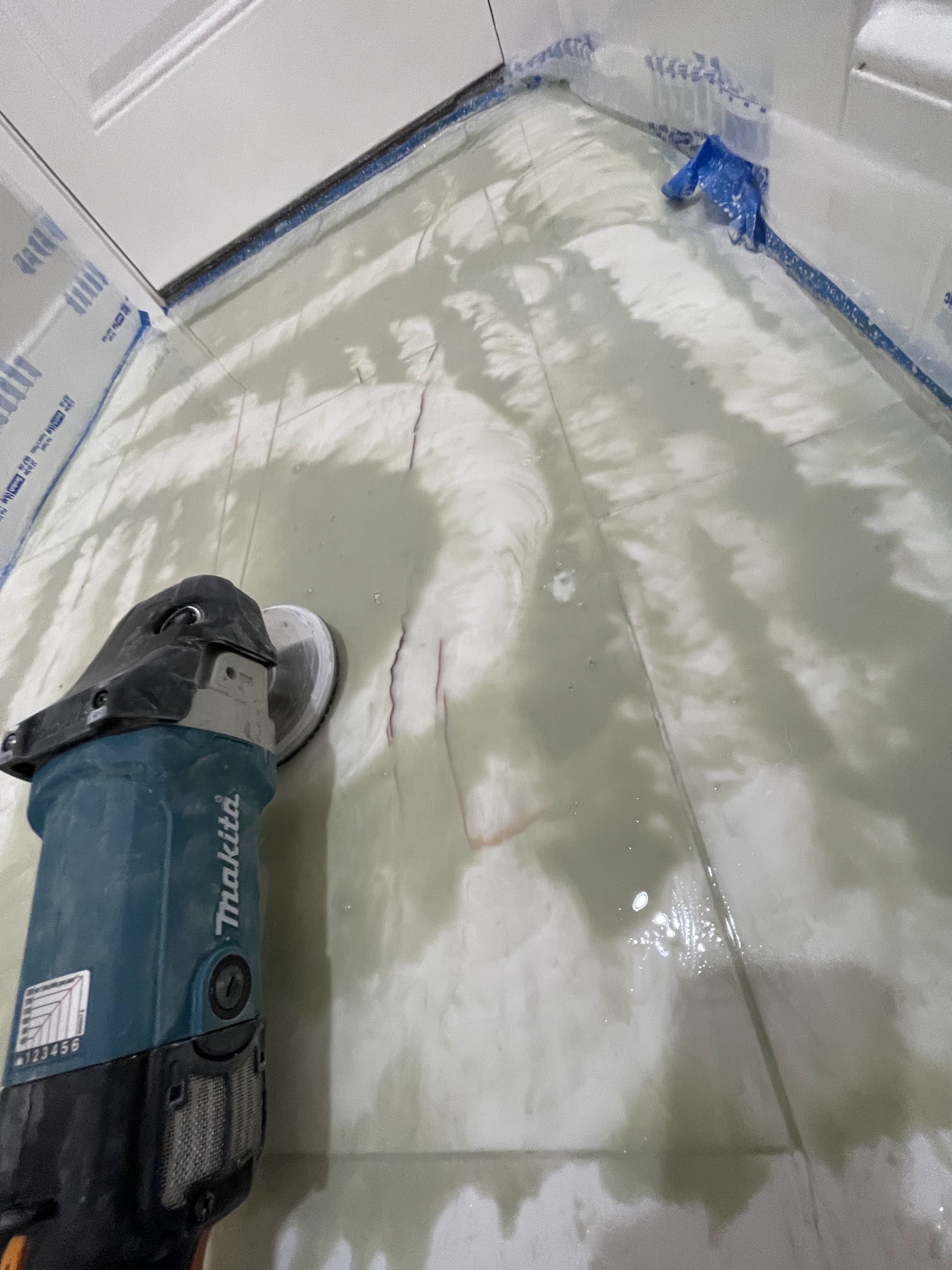
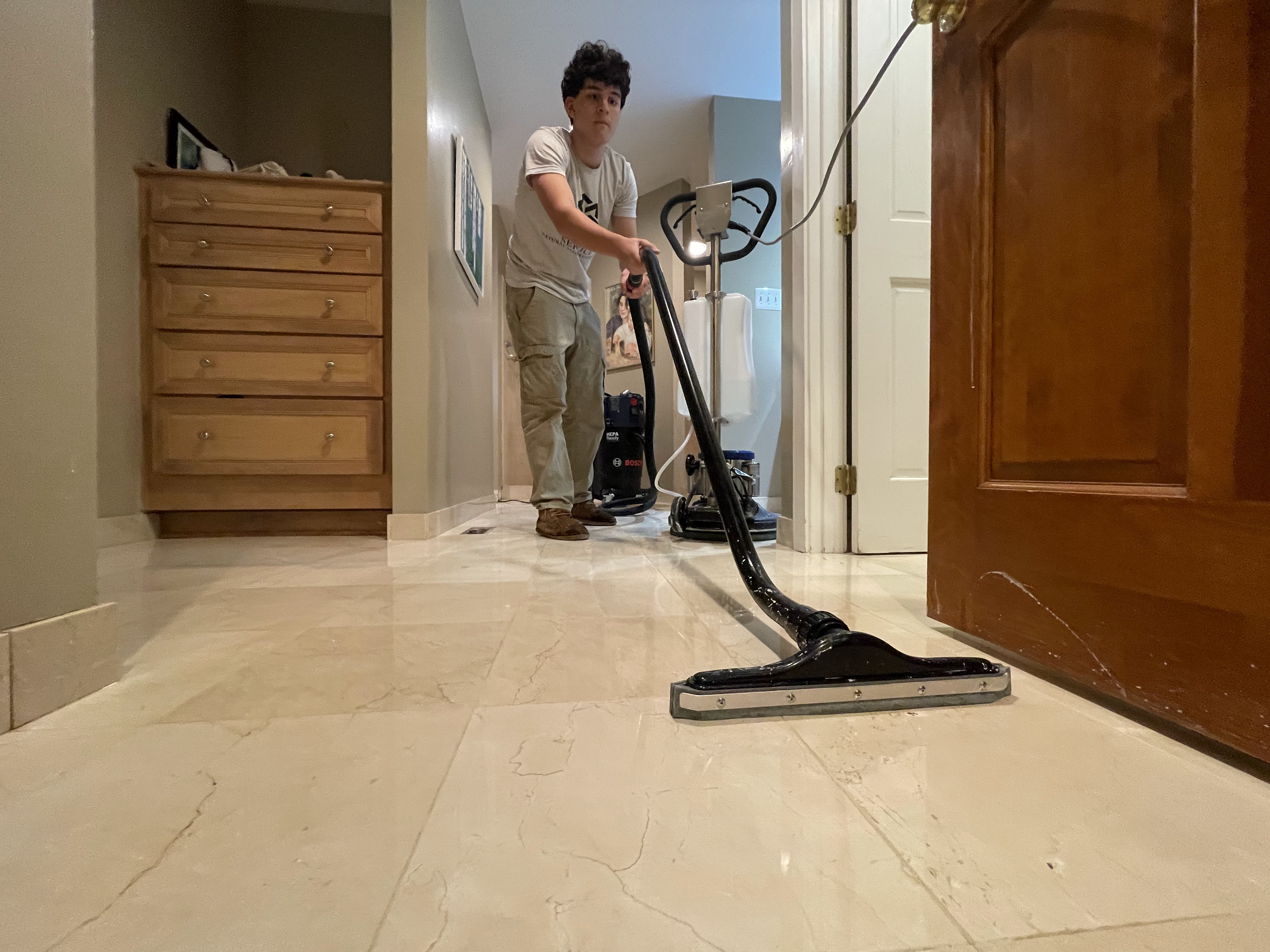
We begin with a full assessment: hollow tile detection, void condition evaluation, surface finish analysis, and stain identification. Any structural issues are addressed first — hollow tiles injected, severe cracks stabilized. Then we fill all surface voids, allow proper cure time, and begin the diamond honing sequence. After honing to the target finish (typically satin or low sheen for travertine), we apply a high-quality penetrating sealer appropriate for the stone type and finish.
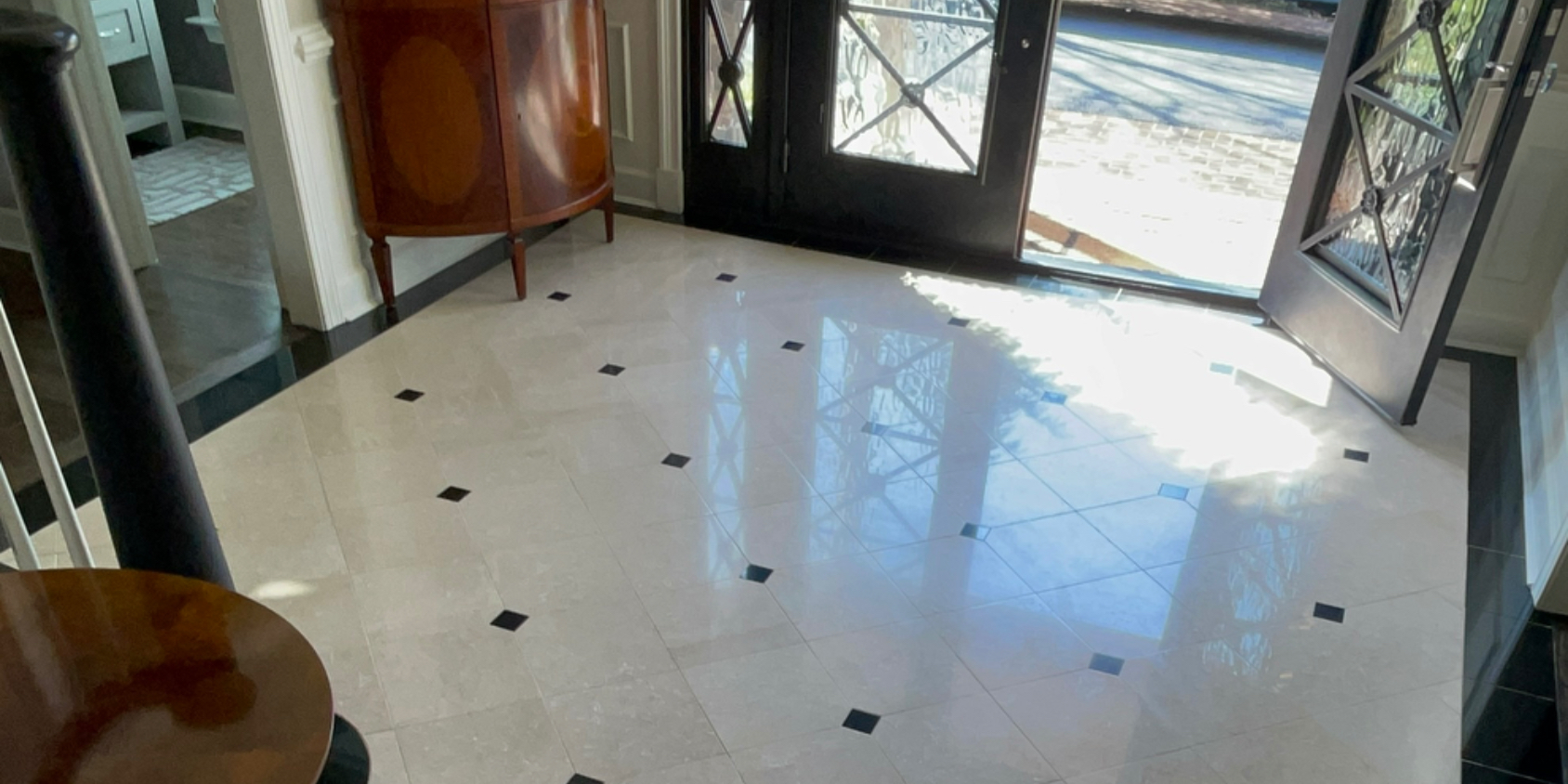
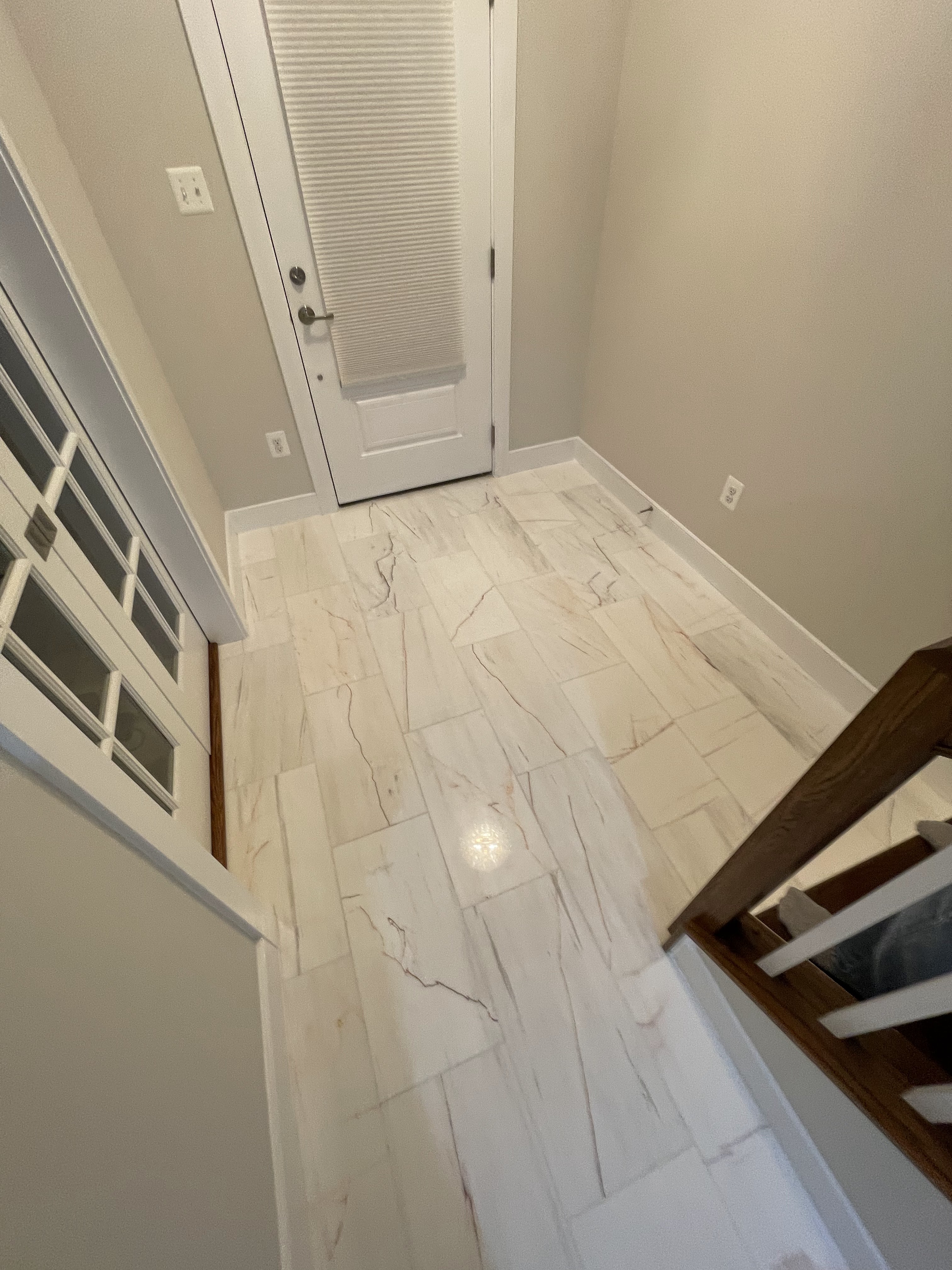
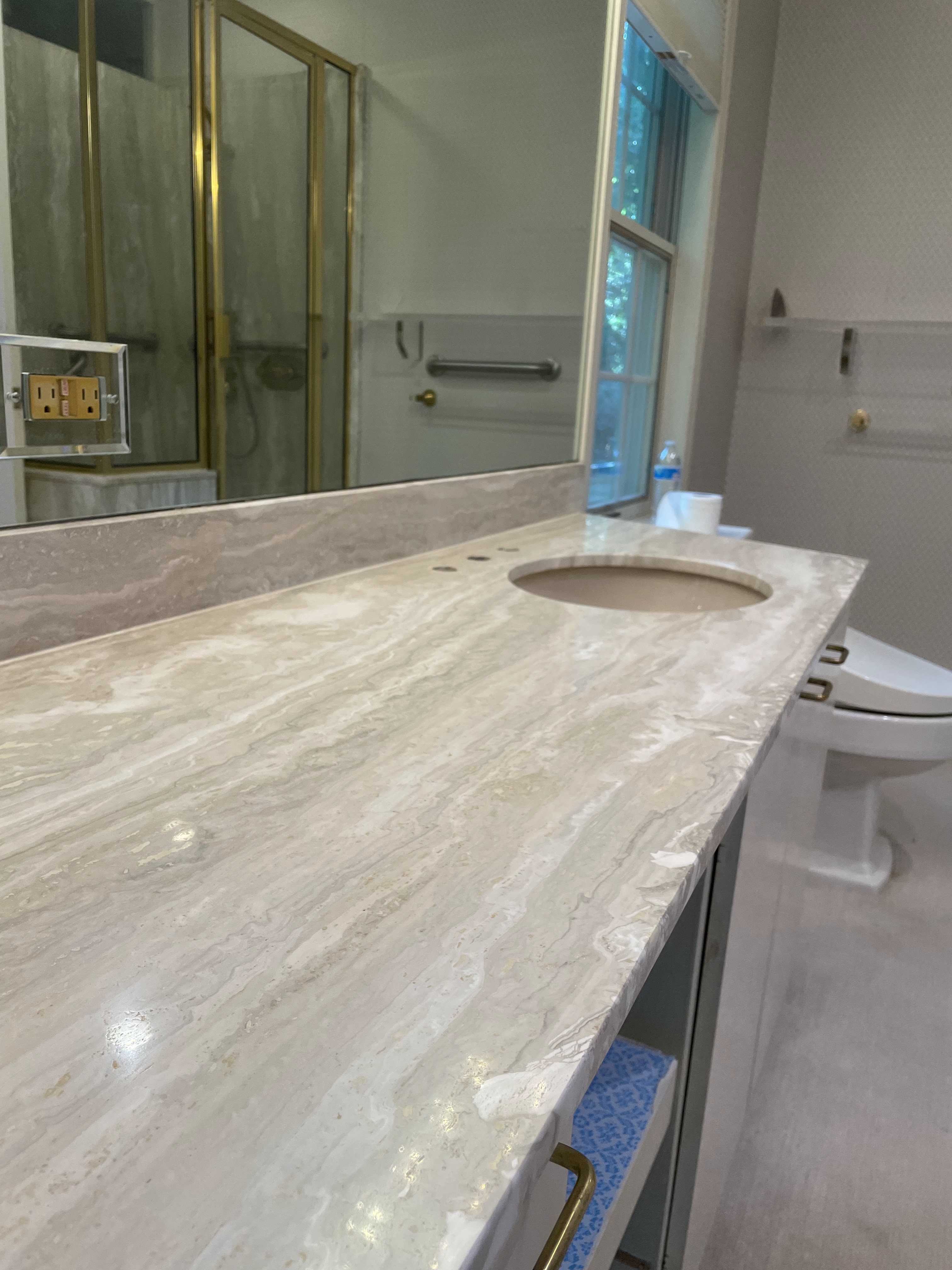
A well-executed travertine restoration is transformative. Floors that have looked worn and dull for years come back to their original warm tone and smooth finish. We've restored travertine installations in Bethesda and McLean homes that were 20+ years old and had never been professionally serviced — the results are remarkable.
Get a travertine assessment
If your travertine floors, countertops, or wall tiles are looking worn, pitted, dull, or damaged, call Crystal Service at 202-413-7979. We serve the entire DC, Maryland, and Northern Virginia area and provide free assessments for all travertine restoration inquiries.
Comments